
Generic shelf ratings printed on retail packaging can mislead installers quoting jobs with heavy storage demands. A box stating a total weight limit rarely specifies the bracket span or wall conditions required for that number. Trade professionals quoting a closet system must calculate load per linear foot using actual framing and hardware, not marketing copy. See also: closet organization layout.
Contents
- What is the weight capacity of wire closet shelving per linear foot?
- How much weight can laminate closet shelving support per linear foot?
- Wire versus laminate: which closet shelving handles heavier loads?
- How does bracket spacing change closet shelving load ratings?
- Can most closet shelves hold 60 pounds per linear foot?
- Material cost per linear foot for wire and laminate closet systems
Key takeaways
- Standard 12-inch and 16-inch ventilated wire closet shelving typically supports 40 to 75 pounds per linear foot when mounted at 16-inch stud spacing with manufacturer-specified brackets.
- Laminate closet shelving supported by a continuous rail or pinned uprights typically holds 50 to 100 pounds per linear foot , depending on board thickness, core material, and bracket spacing.
- Laminate shelving generally provides higher uniform load capacity per linear foot than standard wire shelving because it distributes weight across a solid surface without point-load deflection between wires.
- Doubling the distance between brackets reduces the safe load capacity of both wire and laminate closet shelving exponentially due to beam deflection physics.
- Most standard residential closet shelves can hold 60 pounds per linear foot only if installed according to manufacturer specifications with correct bracket spacing and wall anchoring.
- Standard ventilated wire shelving supports 40 to 75 pounds per linear foot at 16-inch stud spacing.
- Laminate shelving holds 50 to 100 pounds per linear foot depending on core material.
- Doubling bracket spacing drops safe capacity exponentially due to beam deflection physics.
- Wire shelving costs $1.50 to $4.00 per linear foot; laminate ranges from $3.00 to $8.00.
What is the weight capacity of wire closet shelving per linear foot?
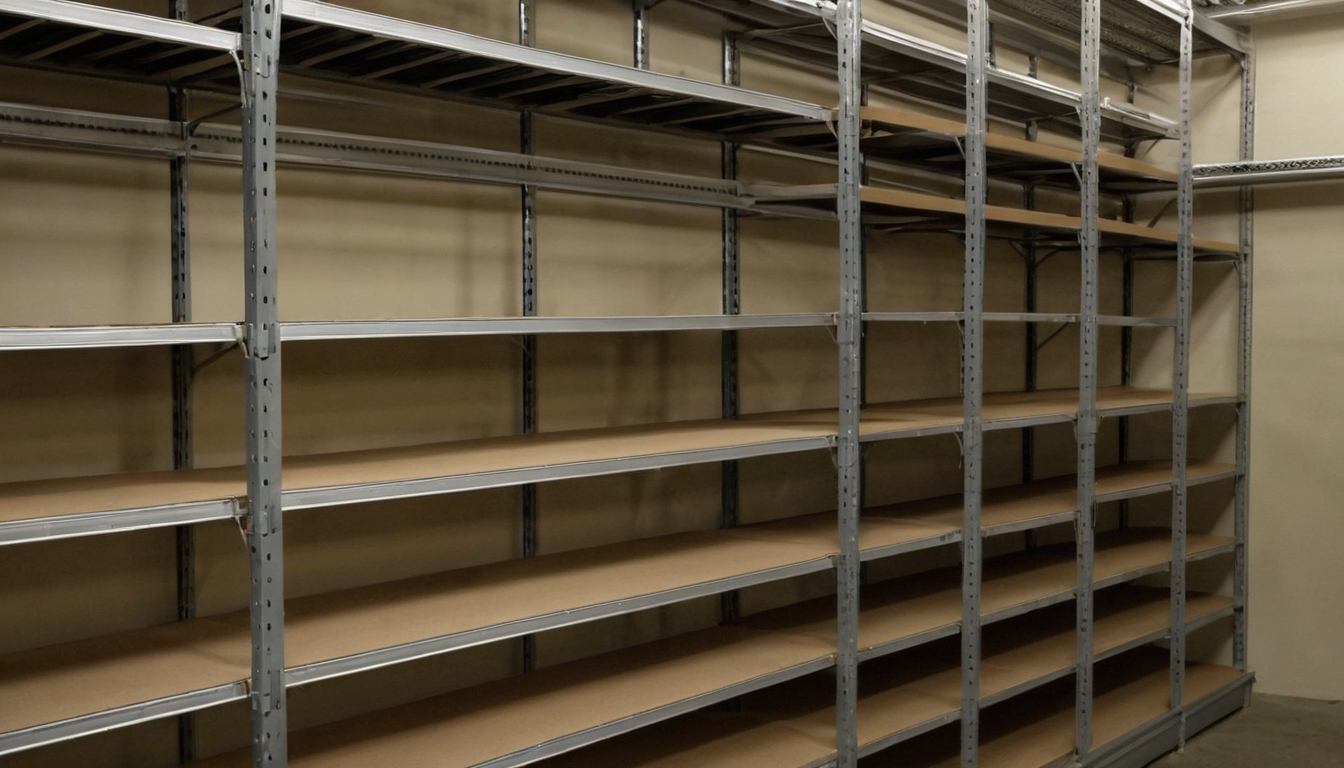
Standard 12-inch and 16-inch ventilated wire closet shelving typically supports 40 to 75 pounds per linear foot when mounted at 16-inch stud spacing with manufacturer-specified brackets. Capacity depends on shelf depth, wire gauge, bracket type, and fastener pull-out strength in the specific wall substrate.
The 40 to 75 pounds per linear foot range applies specifically to standard ventilated wire shelves secured directly into wood studs spaced 16 inches on center. Drywall anchors cut those numbers significantly. Mounting wire tracks into half-inch drywall without hitting a stud limits safe loads to roughly 15 to 25 pounds per linear foot. At that point, fastener pull-out becomes the failure point rather than shelf deflection. Verify the substrate before committing to a load rating for a client.
What is the weight capacity of wire closet shelving per linear foot.
Ventilated wire shelving allows airflow that solid boards block. This ventilation matters beyond keeping stored fabrics fresh. When applying touch-up paint, epoxy coatings, or solvent-based finishes to wire tracks during installation, the U.S. Environmental Protection Agency recommends increasing ventilation when using products that emit volatile organic compounds indoors (EPA indoor air quality guidance). Open the closet door and run an exhaust fan while finishing hardware in enclosed reach-in spaces to clear fumes safely.
Wire shelving provides measurable capacity for ventilated storage, but solid surfaces handle different load profiles. To determine how much weight laminate closet shelving can support per linear foot, examine board composition and deflection thresholds under uniform pressure.
How much weight can laminate closet shelving support per linear foot?
Laminate closet shelving supported by a continuous rail or pinned uprights typically holds 50 to 100 pounds per linear foot, depending on board thickness, core material, and bracket spacing. Particleboard cores deflect faster under point loads than medium-density fiberboard (MDF) or plywood substrates.
Laminate shelf ratings depend on the core beneath the printed melamine surface. Standard 5/8-inch particleboard shelves in systems like the IKEA PAX closet system carry roughly 50 to 60 pounds per linear foot when brackets sit at 16-inch centers. Upgrading to 3/4-inch MDF raises that capacity toward 75 to 100 pounds per linear foot at the same span. Plywood-core laminate panels push the upper limit because the cross-banded veneers resist bending across the grain. Installers quoting heavy storage jobs must confirm the core material before promising a load number to a client.
Deflection limits determine when a shelf fails in practice. A loaded shelf sags before it breaks, and visible sagging ruins a closet organization layout. Industry standards for residential shelving cap acceptable deflection at 1/4 inch over the unsupported span between brackets. A 5/8-inch particleboard shelf spanning 24 inches between supports will exceed that 1/4-inch threshold at roughly 40 pounds per linear foot. Shortening the bracket span to 16 inches keeps the same board under the deflection limit up to about 60 pounds per linear foot. Medium-density fiberboard extends those limits further. A 3/4-inch MDF shelf holds under 1/4 inch of deflection at 24-inch spans with loads approaching 65 pounds per linear foot.
Unsupported span length sets the maximum safe distance between brackets or pinned uprights. Most manufacturer installation guides for laminate closet shelving set 24 inches as the widest recommended span for 5/8-inch boards storing average clothing and linens. Heavier items demand tighter spacing. Storing tool cases, book boxes, or seasonal bins requires reducing the span to 16 inches or adding a center support pin. Exceeding the maximum unsupported span bows the shelf and concentrates stress on the fasteners holding the bracket to the wall, risking pullout from drywall or stripping screws from wood studs.
Point loads behave differently from uniform loads on laminate surfaces. A 30-pound box sitting dead center between two brackets bends the board far more than thirty pounds of folded towels spread evenly across the same distance. Particleboard suffers most from this concentration because the compressed wood chips lack continuous fibers to distribute the force. MDF handles point loads better due to its finer, denser composition. When planning a closet system for heavy gear, position the tallest items directly over a bracket rather than mid-span.
Knowing the per-foot rating for solid boards answers only half the structural question. The next variable is how ventilated wire compares to these solid laminate numbers under identical bracket spacing.
Wire versus laminate: which closet shelving handles heavier loads?
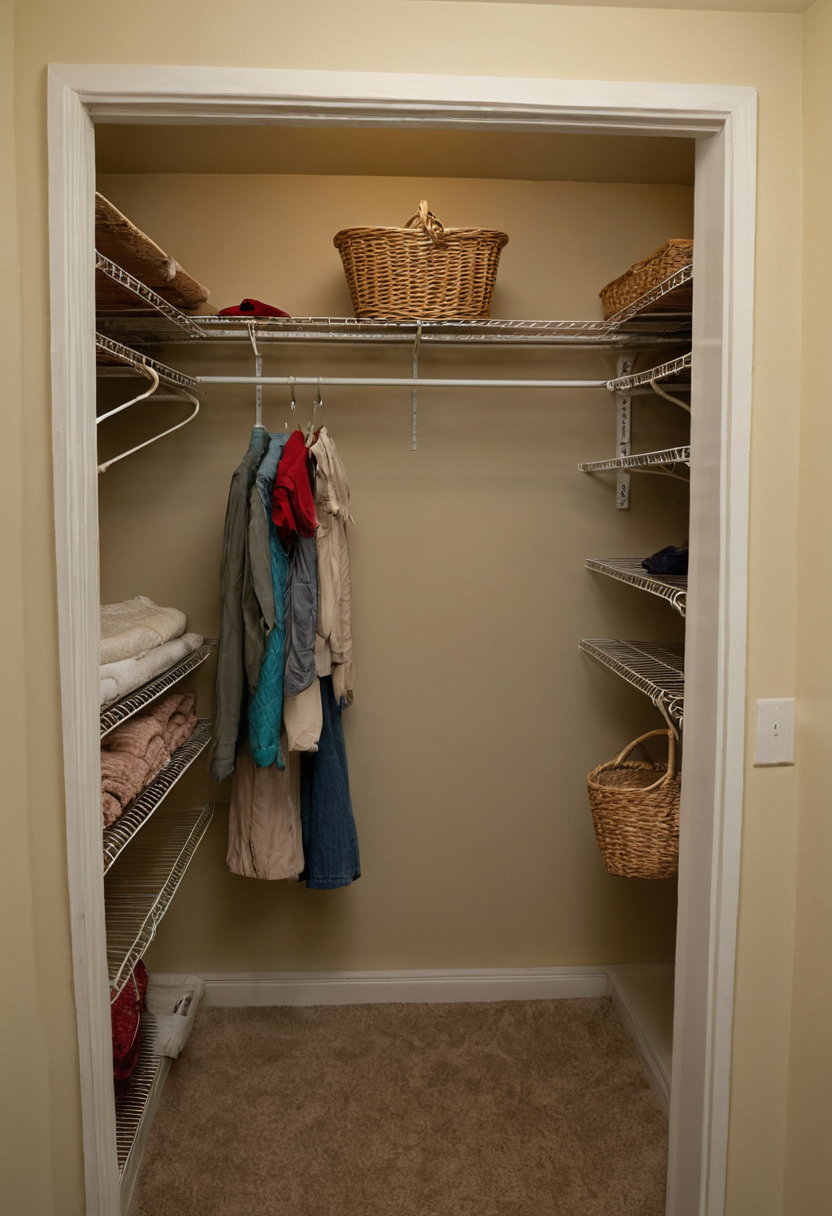
Laminate shelving generally provides higher uniform load capacity per linear foot than standard wire shelving because it distributes weight across a solid surface without point-load deflection between wires. Heavy-duty fixed-mount wire systems can match basic laminate ratings when installed directly into studs at 16-inch centers.
Uniform load distribution separates the two materials structurally. A 5/8-inch thick particleboard or MDF shelf spreads the weight of stacked bins or folded garments evenly across every square inch of the board. Ventilated wire shelving concentrates that same total weight onto parallel steel rods spaced roughly half an inch apart. Heavy items resting on a wire grid create point loads that deflect individual rods downward, while a solid laminate panel resists localized bending until the entire span approaches its failure threshold. For a client storing dense objects like books, tools, or canned goods, laminate provides a stiffer platform under identical bracket spacing.
Moisture exposure reverses the structural advantage in damp closets. Exterior wall cavities and unconditioned spaces introduce humidity that degrades wood-composite shelves over time. The U.S. Environmental Protection Agency guide to mold and moisture states that condensation and wet or damp spots should be fixed promptly to prevent mold growth (EPA mold and moisture guide). Particleboard swells and loses internal bond strength when exposed to sustained moisture, dropping its load rating significantly. Epoxy-coated or vinyl-dipped wire shelving ignores humidity entirely. Steel rods do not absorb water, warp, or delaminate. In laundry rooms, basement reach-in closets, or coastal homes where dampness is routine, wire maintains its original capacity while laminate deteriorates.
Volatile organic compound emissions are another planning variable for enclosed closets with limited airflow. The U.S. Environmental Protection Agency identifies paints, varnishes, waxes, cleaning products, building materials, and furnishings as common indoor sources of volatile organic compounds (EPA indoor air quality guidance). Freshly cut laminate edges and factory-applied melamine finishes off-gas formaldehyde and other solvents inside a closed closet volume. Wire shelving introduces no composite adhesives or edge banding into the space. Installers specifying closet organization layouts for clients sensitive to chemical odors or those enclosing small reach-in closets should weigh material emissions alongside raw pound-per-foot numbers.
Wire versus laminate: which closet shelving handles heavier loads.
Bracket attachment method sets the real-world ceiling for both materials. A laminate shelf rated for 75 pounds per linear foot fails prematurely if mounted solely into drywall with plastic anchors. Wire shelving systems using fixed-mount tracks screwed directly into wood studs at 16-inch centers bypass drywall limitations entirely. The steel track carries the shear load, allowing the wire grid to perform at its published maximum. An closet organization layout built around stud-mounted wire often outlasts floating laminate brackets in high-use family closets. When combining shelf storage with hanging garments, installers must also account for single- or double-hang rod capacity, because the total fastener demand on a single stud bay accumulates quickly.
Wire shelving outperforms laminate under specific installation conditions:
- Closets subject to seasonal humidity swings or direct exterior wall condensation where wood composites swell.
- Enclosed reach-in closets lacking mechanical ventilation where composite off-gassing accumulates.
- Installations anchored exclusively into wood studs via continuous steel mounting tracks rather than discrete shelf pins.
- Storage requirements involving irregularly shaped items that need corrosion resistance more than a flat surface.
Laminate provides greater uniform load stiffness in climate-controlled rooms, but wire holds up where environmental stress or mounting hardware limits the system. Knowing which material carries more weight means nothing if the brackets holding either one pull out of the wall under load. Bracket spacing changes the effective rating of any shelf material far more than the choice between steel wire and pressed wood.
How does bracket spacing change closet shelving load ratings?
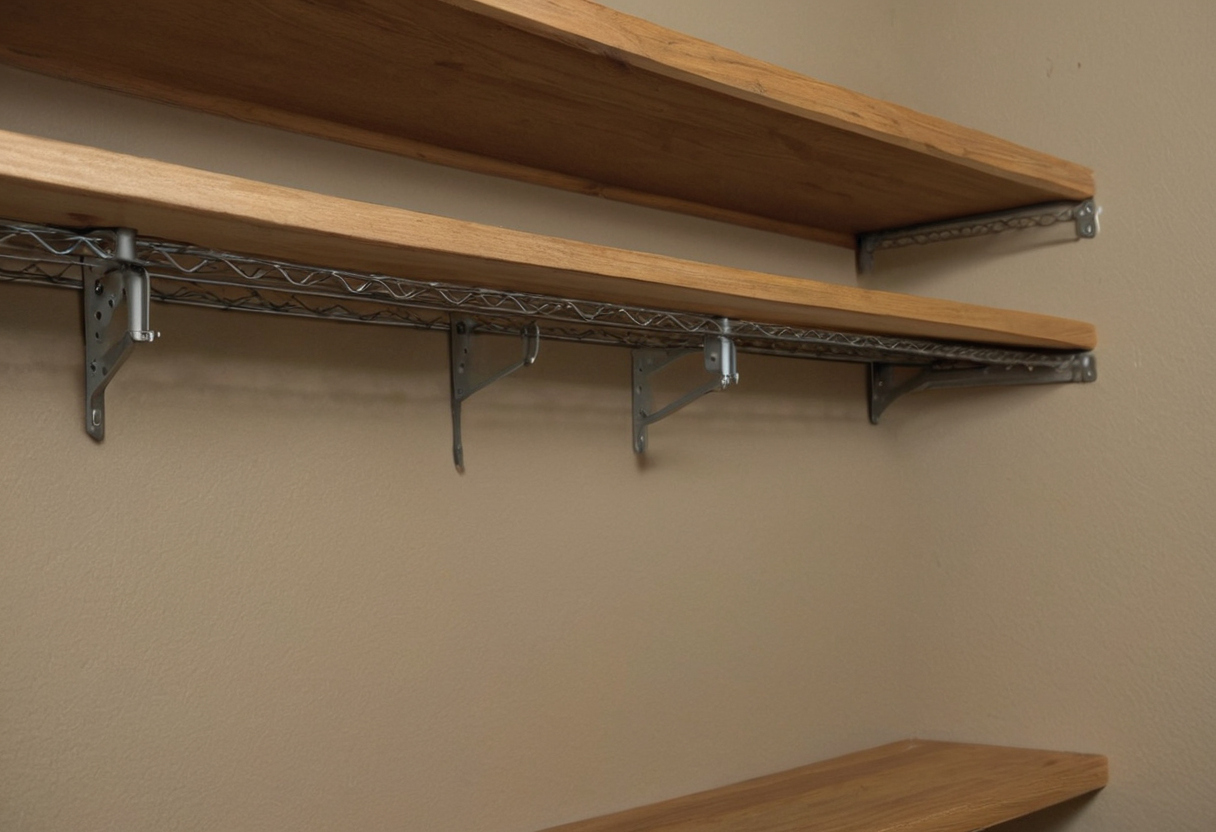
Doubling the distance between brackets reduces the safe load capacity of both wire and laminate closet shelving exponentially due to beam deflection physics. A shelf rated for 75 pounds per linear foot at 16-inch stud spacing may drop below 40 pounds per linear foot at 32-inch spacing.
Beam deflection governs this relationship. The standard engineering formula for a uniformly loaded beam shows that deflection increases with the fourth power of the span length. Doubling the unsupported distance between two closet shelf brackets multiplies the sag by a factor of sixteen under the same total weight. Installers quoting heavy storage jobs must calculate the maximum expected load against the specific bracket span, not just the material rating printed on a box.
Laminate closet shelves cut from 5/8-inch particleboard or medium-density fiberboard show this math clearly. At a 16-inch bracket spacing, a 12-inch deep laminate board handles typical loads of folded denim, books, or boxed seasonal items without visible sag. Stretching that same laminate shelf to 24 inches between brackets introduces measurable downward flex under moderate weight. At 32 inches, the unsupported span allows the particleboard core to creep permanently over weeks of sustained loading. The shelf fails structurally long before the fasteners pull out of the wall studs.
Ventilated wire closet shelving follows the same deflection curve despite its different cross-section. A 12-gauge steel wire shelf relies on its front tube, rear mounting rail, and cross wires acting as a unified truss. Manufacturer installation guides typically mandate support brackets every 16 inches along the wall for standard residential loads. When an installer spaces those brackets at 32 inches to save hardware costs, the cross wires lack sufficient intermediate support. Heavy bins placed in the center of that expanded span push the wire grid downward, distorting the welded joints and eventually causing the shelf to unseat from the end clips.
Fastener selection interacts directly with bracket spacing. Wider spans concentrate more total force onto fewer individual mounting points. A bracket anchored into a wood stud at 16-inch intervals distributes the shelf load across multiple framing members safely. Moving to 32-inch spacing forces each remaining bracket and its screws to carry double the linear load. Drywall anchors fail under these concentrated point loads regardless of their rated pull-out strength in ideal conditions. Screws driven directly into solid framing remain mandatory for any closet system carrying near its maximum published capacity.
How does bracket spacing change closet shelving load ratings.
Measuring the bracket span determines whether a given material can hold a target weight, but installers still need to verify whether the baseline threshold of 60 pounds per linear foot is achievable for most standard residential closets.
Can most closet shelves hold 60 pounds per linear foot?
Most standard residential closet shelves can hold 60 pounds per linear foot only if installed according to manufacturer specifications with correct bracket spacing and wall anchoring. Basic tension-mounted wire shelves and thin particleboard boards often fail or deflect unacceptably at this load without intermediate supports.
Entry-level ventilated wire shelving, typically the 12-inch depth sold in big-box stores, rarely reaches 60 pounds per linear foot safely. Standard published ratings for these lightweight wire grids fall between 40 and 50 pounds per linear foot when brackets sit on 16-inch stud centers. Mid-grade 16-inch wire systems with heavy-duty brackets and continuous track mounting can approach the 60-pound mark, but installers must verify the specific load table for the selected hardware rather than assuming all wire grids perform equally.
Laminate shelving reaches 60 pounds per linear foot more readily, provided the substrate is dense enough. A 5/8-inch or 3/4-inch medium-density fiberboard shelf spanning 16 inches between brackets handles this load with minimal deflection. Thinner 1/2-inch particleboard sags under 60 pounds per linear foot over time, especially in closets where seasonal storage swaps leave heavy bins sitting in one spot for months. Pairing a laminate shelf with a steel stiffener rail along the front edge increases capacity significantly.
Wall substrate determines whether any shelf material delivers its rated capacity. Fasteners driven into wood studs carry the full pull-out strength required for 60 pounds per linear foot. Anchors set in 1/2-inch drywall alone cannot sustain that force; toggle bolts improve holding power but still fall short of direct wood fastening for sustained heavy loads. Concrete or masonry walls require appropriate sleeve anchors or tapcons drilled to the specified depth.
Achieving 60 pounds per linear foot depends entirely on matching the shelf material to the correct bracket span and wall anchor. Installers quoting a job with heavy storage demands also need to calculate the total project expense, starting with the material cost per linear foot for wire and laminate closet systems.
Material cost per linear foot for wire and laminate closet systems
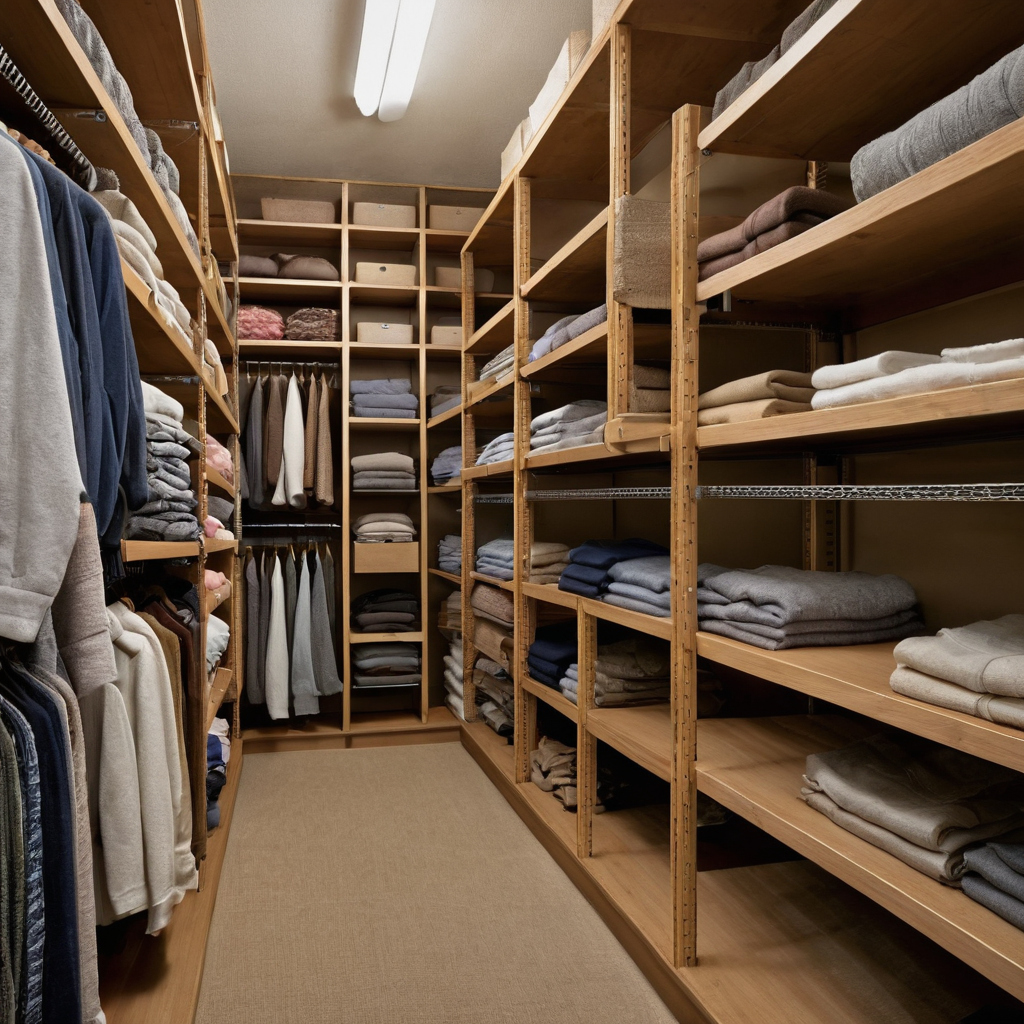
For US trade professionals quoting a closet organization project, standard wire shelving costs approximately $1.50 to $4.00 per linear foot, while comparable laminate systems range from $3.00 to $8.00 per linear foot. Heavy-duty variants and premium finishes increase both material and hardware costs.
Wire shelving pricing depends on depth and coating. A 12-inch ventilated wire shelf typically runs $1.50 to $2.50 per linear foot at retail distributor rates. The 16-inch depth adds roughly $0.50 to $1.00 per linear foot because of the extra steel and wider epoxy or vinyl coating coverage. Bulk contractor packs lower that unit cost, but individual client quotes should use retail pricing to cover handling and waste.
Laminate shelving has a higher base price driven by core material and edge treatment. Standard melamine-faced particleboard in a 12-inch depth starts around $3.00 per linear foot. Upgrading to a 16-inch depth or switching to medium-density fiberboard pushes the material cost toward $5.00 to $8.00 per linear foot. Pre-finished edges and thicker profiles sit at the top of that range. Raw boards requiring custom edge banding add labor time even if the raw material appears cheaper.
Material cost per linear foot for wire and laminate closet systems.
Bracket and fastener costs shift the final quote when a closet system must meet maximum load ratings. Standard wire brackets spaced at 16 inches add roughly $0.75 to $1.25 per linear foot to the total installed material cost. Laminate support hardware, including heavy-duty steel standards and brackets rated for 60 pounds per linear foot, often doubles that accessory line item. Fasteners anchored directly into wood studs cost less than specialized drywall toggles required for hollow-wall installations.
Quoting a client job requires matching the material budget to the structural demand established earlier. Wire shelving keeps material costs low for ventilated storage under 40 pounds per linear foot. Laminate justifies its higher price when solid surfaces and heavier loads are non-negotiable. Calculate the total linear footage, multiply by the appropriate depth-specific rate, add the bracket span surcharge, and present the client with a single installed figure that reflects the actual capacity they need.
For more on this topic, see other guides on this site.